Additional information
| Weight | 36 lbs |
|---|---|
| Dimensions | 14 × 9 × 14 in |
Premium Parts
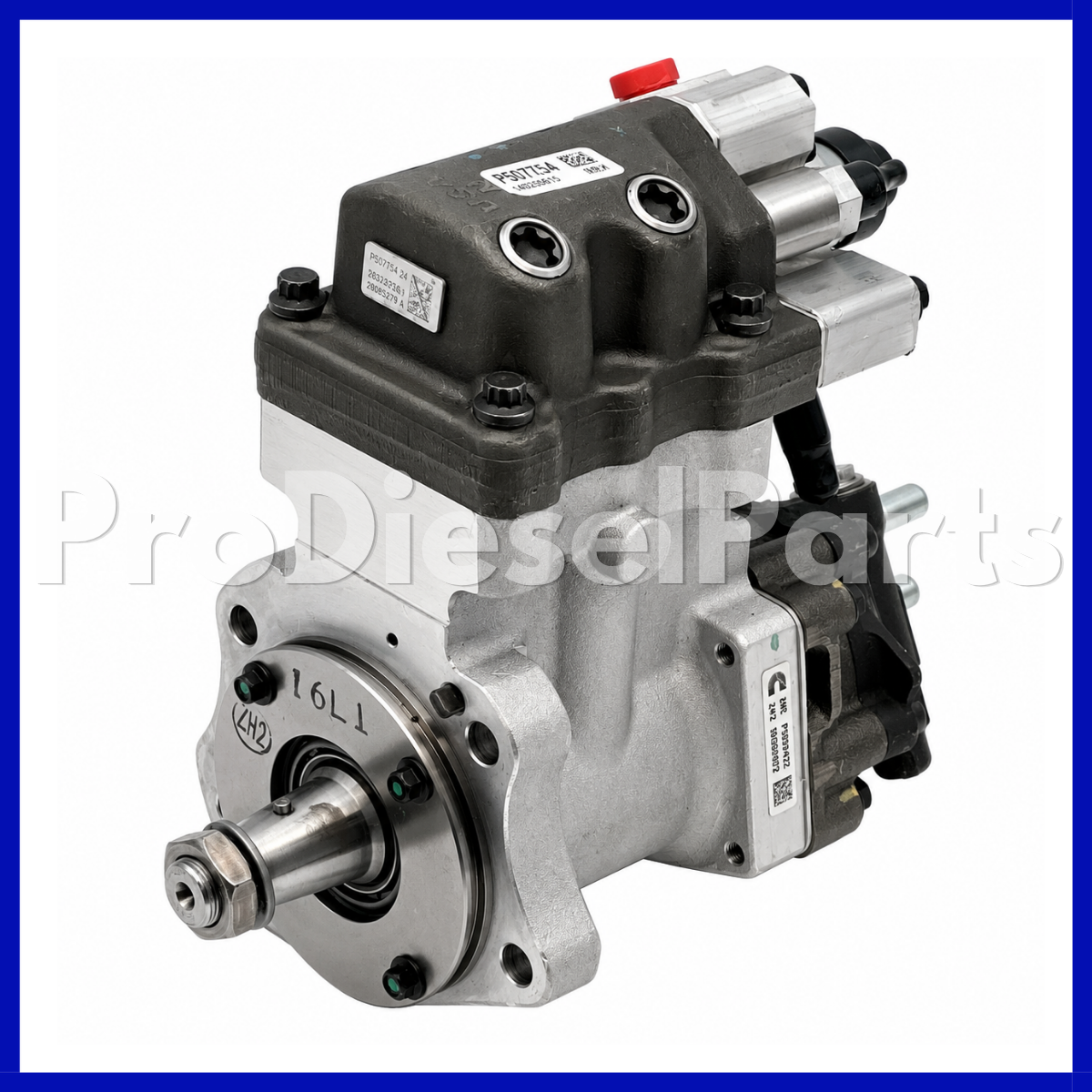
Fuel Injection Pump Cummins Engine ISC 8.3L / ISL 8.9L
$2,648.96
In Stock| Weight | 36 lbs |
|---|---|
| Dimensions | 14 × 9 × 14 in |
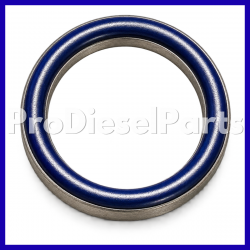
It seals the joint between mated components, preventing fluid leaks and maintaining circuit pressure. It is installed in a circular seat between two mated components of the fuel system, where it creates a seal that prevents diesel leaks and pressure loss. It is not an external engine block gasket. Some sources refer to this family of seals as Fuel Shaft O-Rings, so the application may be associated with the shaft/fuel system circuit area.
Observed on 6C 8.3 6CT 6CTA, ISC 8.3, QSC 8.3, ISL 8.9, QSL 8.9 engines.
We always recommend checking the ESN and CPL in the Cummins OEM catalog, because the same O-ring is used across different engine families, and the quantity and location may vary depending on the engine configuration.
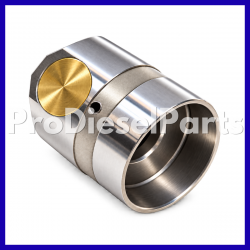
It transmits mechanical motion to the pumping section of the high-pressure pump, it operates within the fuel pump drive system. The roller follows the control profile and transfers force to the pump, enabling the pump to generate the pressure required for the fuel injection system.
The part is also listed for use in Cummins ISC 8.3 and QSC 8.3 / PACCAR PX-8 applications, while other catalogs also list it for use with ISL 8.9 / ISL 9, QSL 8.9 / QSL 9 and the CCR1600 pump.
However, to ensure exact compatibility, you must verify the ESN (Engine Serial Number), CPL, pump model, and pump part number, because there may be different configurations within the ISC/ISL families.
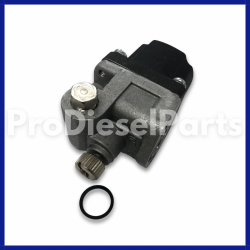
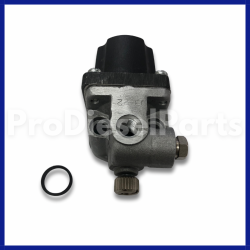
Fuel Pump Shutoff Valve 12 Volts Cummins Engine L10 -Cummins Engine ISL-Cummins Engine QSL